Of course I said yes to Amy Grant
My firstborn child, Emma, texted me a few months back, saying, “MOM, do you want to see Amy Grant with me in September?” My heart melted and a big smile spread across my face. I could sense Emma’s excitement, and soon they sent me the confirmation of our tickets.
As I anticipated the concert, I felt touched that my twenty-three-year-old child would offer to take me out with them. Emma LOVES live music and regularly attends shows from musical genres of all kinds. Those who know Emma appreciate their quirky fashion sense and eclectic taste. Emma appreciates music from yacht rock to punk rock. They also love art, cats, sailing, and nautical antiques, and they have been exploring horror films and goth culture of late. But Amy Grant?
Let me explain.
Emma grew up with me as their mother, and I was once a young evangelical church girl. I lived for my Wednesday night youth group gatherings and proudly carried my Bible in my backpack to public high school and my Virgin Pride card in my wallet. I was zealous in every way, hoping to make an impact on my friends with the gospel. Always inviting friends to youth group and having heartfelt conversations during lunch, I was voted Most Conservative by my senior class. Like many young Christian teens in the 80s and 90s, Amy Grant was more than just a role model to me. She was the evidence that being a Christian could be relatable and cool.
Although the younger me would have never expected it, Emma was not raised as an evangelical church girl. By the time Emma turned ten, we had begun exploring house church as a family and eventually discovered community alongside a diversity of friends with all types of backgrounds. I’ve just completed a book about my young life and spiritual journey titled,
Becoming the Other: How I Accidentally Discovered Beauty in All I Once Feared.
Writing my book was a cathartic experience of reconnecting with the younger me who had grown up inside a world of certainty, belonging, and meaning. It was a world I had never expected to leave. I write about the painful loss of identity, the excitement and curiosity of connection, and the unexpected joy of discovering I belong to the mysterious Divine and to the whole world. I look forward to sharing it with you all.
But let’s get back to Amy Grant.
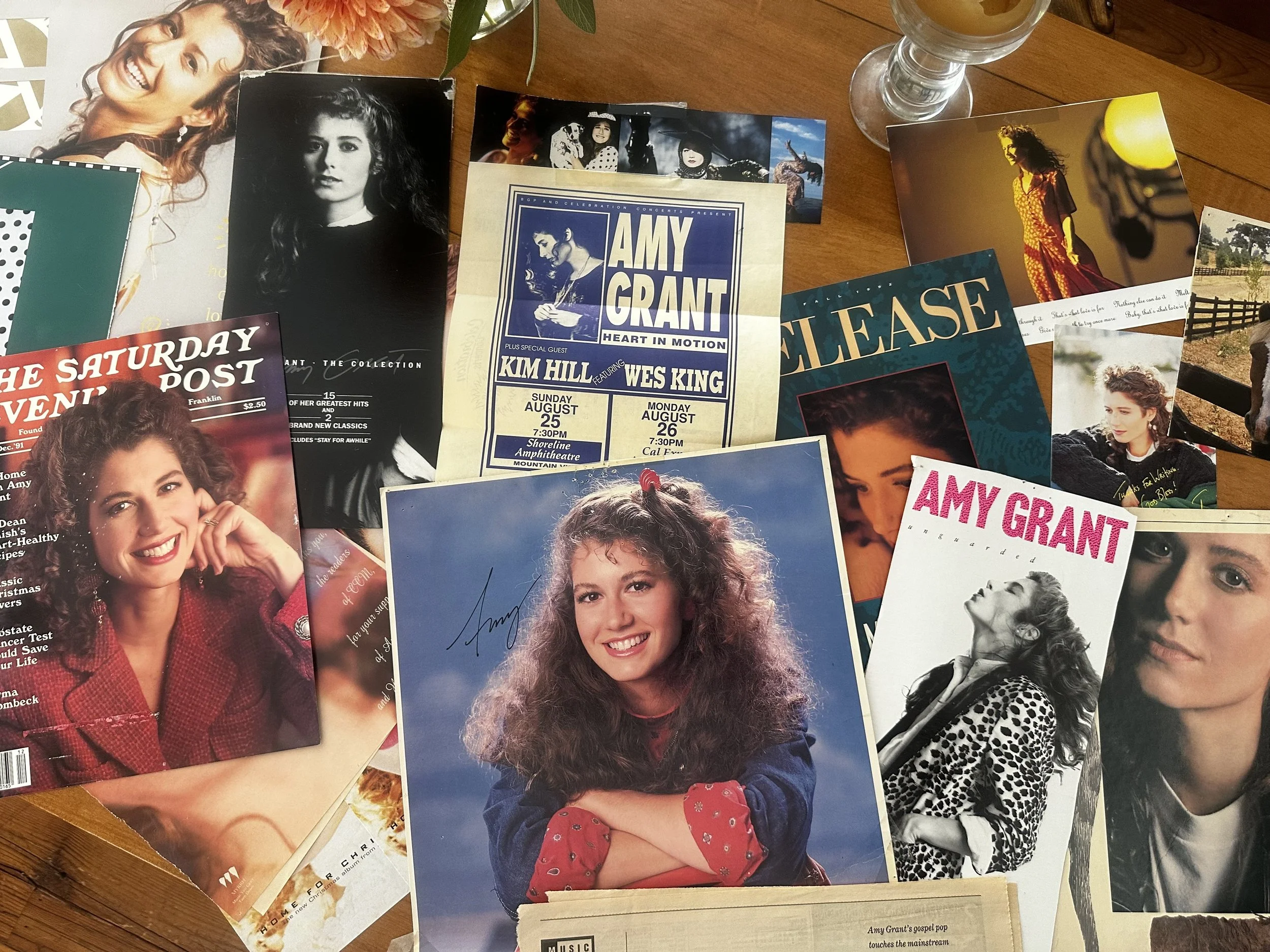
The younger me knew every single lyric Amy Grant ever sang. I was a member of the Friends of Amy fan club and had a life-sized, cardboard cut-out of Amy in my bedroom. Emma knew her classic cross-over hits like “Every Heartbeat” and “Baby Baby” but was most familiar with her Christmas music. Emma is particularly fond of the song “Emmanuel,” which they call a “banger.” “It’s that 80s synthesizer that I can’t get enough of! That song slaps!” they’ve always said with enthusiasm.
As the week of the concert arrived, I began to feel a bit nervous about the upcoming event. Don’t get me wrong, I love Amy. I’ve followed her through the years and have watched her own life from afar. Unlike my own youthful fervor and evangelical zeal, Amy has always had a refreshingly down-to-earth presence.
But these are divided times. Emma and I talked briefly at dinner that night about the murder of Charlie Kirk, which had occurred just the day before. We talked about the danger of falling into an US vs. THEM mentality, even when people make you the “other,” and about how challenging but important it is to remember our complexity and our common humanity.
We walked into the theater in Denver together, smiling and excited, looking for our seats. Emma commented that they’d never been to a concert where you sat during the whole event. Once situated in the center near the back, Emma’s joy made me smile. Although my nonbinary child, a proud member of the LGBTQ community, was at least thirty years younger than most everyone there, Emma was clearly pumped to see Amy walk out on stage. With loud hoots and hollers, Emma cheered for my high school idol.
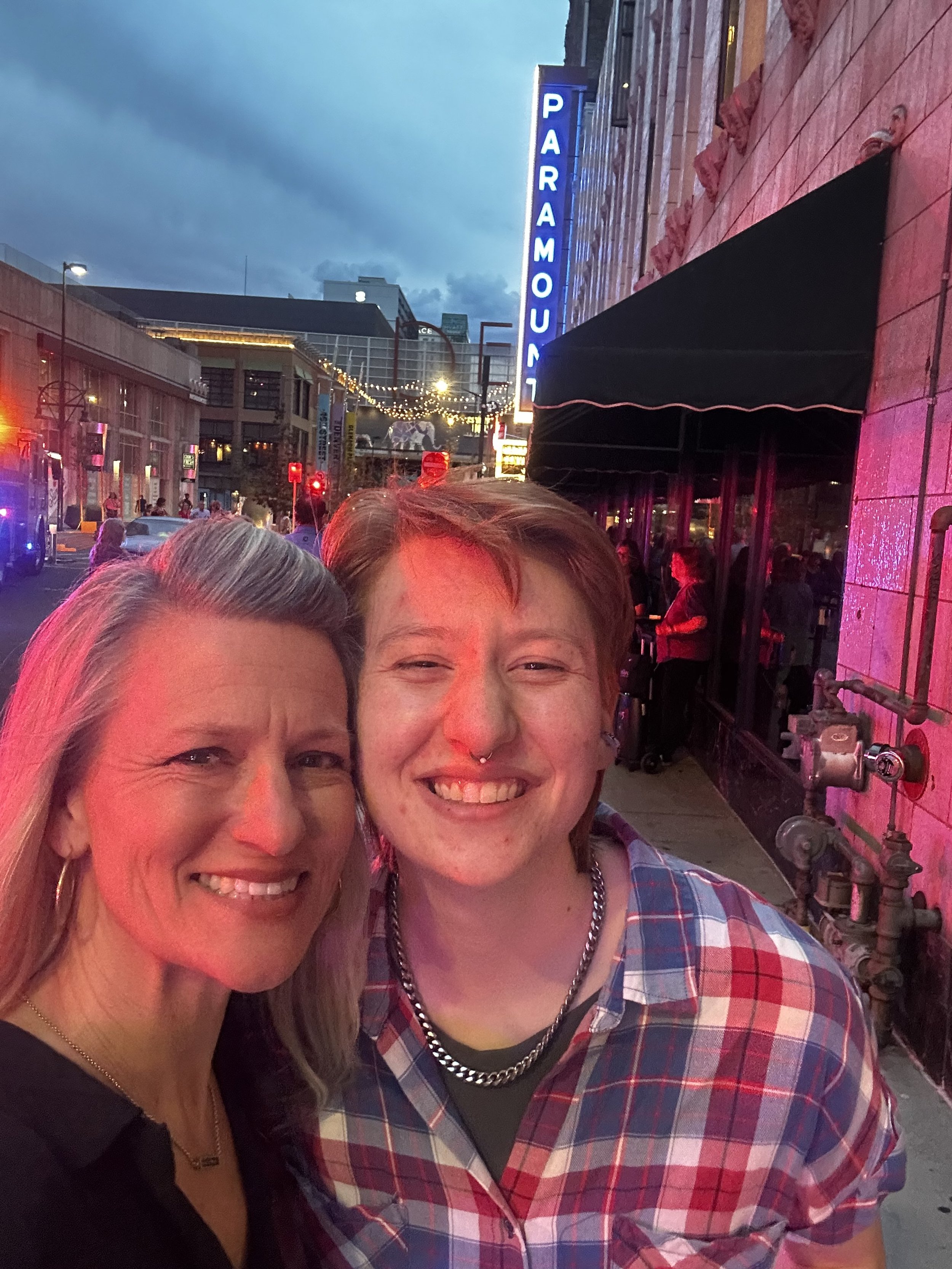
“She’s so cool!” Emma leaned over and said with a smile. Emma was used to being at concerts filled with older people. They had recently seen Billy Idol in concert and remarked about how cool he was too. As each song began, Emma’s woo-hoos rang out loudly with joy. An older man seated beside us turned to face Emma and said with exasperation, “Are you going to do that all night?”
Without skipping a beat, Emma smiled and said, “Oh yeah!” and went on joyfully cheering.
My heart sank. For a moment I worried that Emma would feel judged or bummed out by his negative remark. I realized that I’d been carrying anxiety about this potentially conservative Christian crowd, wondering if Emma would feel out of place or othered. I knew I would feel nostalgia as the old songs played, but I worried that even the lyrics to these old songs I once sang in church might create a sense of separation for my kid.
But Emma just beamed.
A few songs in, Amy played an upbeat but lesser known song called “The Power.” I began clapping and did my best to dance while seated. The woman on my left was holding a beer and doing the same. We made eye contact and I said, “It’s so weird that we are sitting right now!” She said, “I know! What the fuck!” and went on clapping and seat-dancing alongside me.
The irony of Mr. Grumpy pants to our right and my new WTF friend on my left made me giggle.
Amy invited us all to stand as she sang “Baby, Baby,” and I hugged my firstborn tight with tears in my eyes, knowing that Amy had written this song for her own daughter. I was so moved that my child wanted to share this experience with me.
Amy played songs from her Age to Age and Lead Me On albums, and the lyrics poured from my lips as memories flooded my mind. Out of the corner of my eye, my WTF friend’s date seemed to be really getting into some of those oldies too. Emma raved about the sound of the 80s guitar and how it reminded them of the song from Top Gun. Mr. Grumpy pants was nodding his head and looking pleased with the guitar solo too. We were all having a great time.
Amy introduced her next song by saying it was the one song she’d always included in every concert since her youth. She explained it by saying something like this: “There are many names for God. This next song lists the many names of God that are written in the Hebrew Bible. I believe that God is love. So any time you’ve felt love between yourself and someone else, I believe that’s God.” Then she went on to sing her classic, “El Shaddai.”
Over the past five years as I’ve been working on my book, I’ve revisited many of the old Christian songs from my childhood. Each chapter of my book is titled after a song. The music of my youth reinforced the beliefs I’d been given that gave shape to my world.
These lyrics had told me there was a way to live “right,” that I should avoid being deceived, and to be bold and share the gospel. Whenever I revisit those old songs, I feel a sharpness in the nostalgia. It is mixed with the painful realization that the younger me felt so much fear about getting it “right” and a tremendous responsibility for saving “the lost.” The old belief system I was raised in inevitably bred judgment as I looked for Bible verses and black-and-white answers. In my youth, that music had reinforced a sense of separation, and frankly, I’m often tempted to distance myself from anything that reminds me too much of my younger self.
But this experience of sitting in a theater with Amy Grant and Emma felt different. Amy had created the space for anyone in the room to listen to this song with a sense of openness. It was as if she were saying, “Don’t get hung up on the words. Have you experienced love? This song is about that.”
During “El Shaddai,” I could hear my WTF friend crying audibly. I felt the emotion in the room, the collective nostalgia and history and memories that we were all experiencing in connection to that song.
I sang the words to Amy’s old music that night without sharpness or pain. Was it Emma’s unflinching joy and openness that had given me that permission? Or was it Amy’s example that there was a way to be herself, to sing her old Christian songs without diminishing other people’s unique experiences of love—of God?
Near the end of the concert, the keyboard player started out with a solo. My mouth was open with that oh-my-gosh-I-forgot-about-this-song look on my face. As the electric guitar joined in with the emotional swell of the song, everyone rose to their feet in recognition, and I leaned into Emma, saying, “Ok, just picture all these people as their teenage selves. Most of them were probably church kids, and they know this song well! Can you imagine how cool it was for all of us to have Amy make Christian music so amazing!?” Emma’s smile registered an understanding, and we linked up with one arm around each other and one arm in the air swaying to the music. My WTF friend and her date were swaying alongside us, and the whole room erupted in the chorus, “Sing your praise to the Lord! Come on, everybody! Stand up and sing one more hallelujah! Sing your praise to the Lord, I can never tell you, just how much good that it’s gonna do ya!”
I was laughing with joy, kind of in shock that I was enjoying singing this old praise ballad with my offspring.
It was in that moment that I realized that my WTF friend’s partner was another woman.
She was wearing a baseball cap, and out of the corner of my eye I had not realized until then that Emma and I were seated next to a same-sex couple. Out of all the ticketed seats, the fact that we were seated together did not feel like an accident.
My heart suddenly felt flooded with love. Love for them, love for the moment I was in with my beautiful child, love for my own story (even the parts I carry shame about), and love for the complexity of being human.
We shared a moment together when the concert was over. Emma and I listened to the couple share that they’d known Amy’s music since the very beginning, that one of them had grown up in the South. I introduced Emma and shared that I’d been very conservative and certain as a young Amy Grant-adoring teen. I even mentioned my book and the fact that Emma discovering their identity at age fifteen had been a huge part of me learning to open my heart. They spoke kind words of encouragement, and we exchanged numbers.
We ended up being parked near this lovely couple, navigating the parking garage and post-concert crowds alongside them. As we left to walk to Emma’s car, we blew kisses and waved at one another. Emma got in the car and said, “I love gay people.” I smiled and said, “Me too.” Emma expressed how seeing older gay couples makes them feel “warm and good”—perhaps a glimpse into their own settled, loving future.
I hadn’t expected our evening with Amy Grant to go this way. My surprise reveals the assumptions I’d been carrying. It’s so easy to assume we know who people are—groups of people, “types” of people. I’m still unpacking who I am, in all my curious layers and complexities. Emma, Amy, and our new friends helped to heal a part of me that night, by reminding me that none of us are just one thing. We are so much more than the labels we use like conservative, liberal, gay, Christian, or former evangelical.
Sometimes we are all of them at once.
We are all carrying around our younger selves, as well as the aspects of self that have not yet been realized. All these parts of us belong. We are just so very human, which means we also find comfort in our like-minded groups—the communities that help us feel safe.
I am curious about this—about how we will navigate this divided, painful world moving forward. Collectively, we feel the pain, disconnection, and trauma in every refresh of our newsfeed. We wonder whether humans have lost the ability to love beyond our algorithmic tribes.
How can we learn to love the ONE (the commonalities and unity we share) as well as the OTHER (our difference and diversity)?
Today some friends of mine and I recorded the first episode of The One and Other podcast, a space to explore the beauty of difference and the necessity of connection.
I would love for you to follow along and join the conversation!